
Ivan VI
The Tragic Child Emperor of Russia (1740-1741)

The reign of Ivan VI stands as one of the most tragic and controversial chapters in Russian imperial history. Born in 1740, the child emperor's life was marked by political intrigue, power struggles, and his eventual imprisonment for most of his life.
As the infant successor of Empress Anna Ivanovna, Ivan VI’s reign was over before it truly began, yet it left an indelible mark on Russian history and the Romanov dynasty.
Dear readers and subscribers,
This article examines the short-lived reign of Ivan VI, the coup that led to his deposition, and the broader implications of his tragic fate.
It also reflects on how art and imperial representation contributed to the narrative of his reign, despite his brief time on the throne.
The Birth of Ivan VI: A Puppet Emperor's Rise
The Unexpected Heir
Born on August 23, 1740, Ivan VI was the son of Anna Leopoldovna and Anton Ulrich of Braunschweig-Wolfenbüttel. His mother was a niece of Empress Anna Ivanovna, and his birth set the stage for a series of political machinations.
When Anna Ivanovna died in October 1740, she left no direct heirs.
In her will, she appointed her young grandnephew, Ivan VI, as the next emperor, with his mother, Anna Leopoldovna, serving as regent.
The infant emperor’s ascension was, in essence, a manipulation by the Russian aristocracy, who saw in him an opportunity to regain power from the court factions dominated by the likes of Ernst Johann von Biron.
[NOTE: For more on Duke and former Regent Biron, please read my previous publication about Empress Anna Ivanovna—JBM]
The situation was complicated further by the factions at court, which saw Ivan VI not as a true ruler, but as a puppet under the control of his mother and her supporters.
Although the empress’s death seemed to promise a peaceful transition, the Russian court was far from united.
Biron, once the most influential figure at court, was arrested and exiled by the regency, but his enemies were equally eager to seize control.
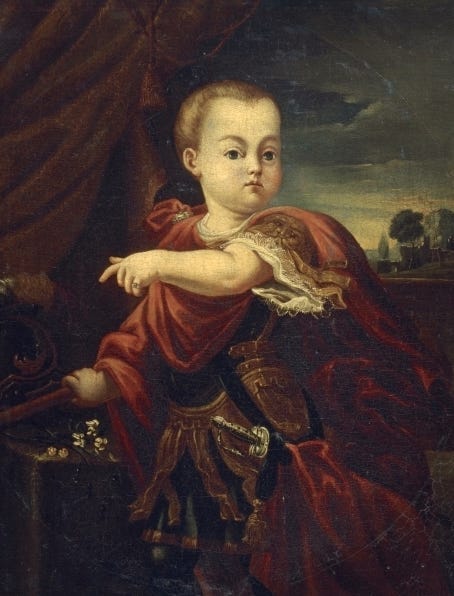
This early portrait of Ivan VI shows him in his royal regalia, though his youth and innocence underscore the tension between his status as emperor and the political instability surrounding him.
The Coup and the Fall of Ivan VI
A Child Emperor’s Deposition
The reign of Ivan VI lasted only a few months.
By November 1741, a military coup led by Elizabeth Petrovna, daughter of Peter the Great and niece of Ivan VI, had deposed the infant emperor. Elizabeth, who had long been a figurehead for those dissatisfied with the regency of Anna Leopoldovna, orchestrated the Palace Revolution.
With the support of key military figures and the backing of the St. Petersburg guards, Elizabeth seized control of the throne, and Ivan VI’s reign ended before it could truly begin.
Anna Leopoldovna and her family were imprisoned, while Ivan VI was declared officially dethroned. Elizabeth’s accession to the throne marked the beginning of a new era of Russian autocracy, firmly re-establishing the Romanov dynasty under her rule.
Yet for Ivan VI, the coup was only the beginning of a life spent in confinement.
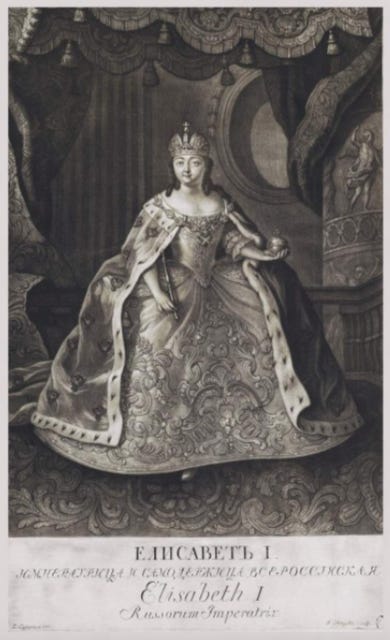
This portrait, though not directly related to Ivan VI, is significant for its reflection of Elizabeth's strong, decisive nature and the coup that led to Ivan's downfall. The grandeur of her coronation mirrors the shift in power.
The Fate of Ivan VI: Imprisonment and Death
Following his deposition, Ivan VI’s life became a tragic tale of imprisonment and obscurity. He was confined in a fortress, first in Schlusselburg, then later in a more remote location.
His imprisonment was shrouded in secrecy, and while he was technically kept alive, he was removed from all forms of public life.
In 1764, at the age of 23, Ivan VI was murdered by his guards during an attempted escape, marking the cruel end of a life that had been tragically shaped by forces far beyond his control.
The tragic nature of Ivan VI’s life, marked by political maneuvering from birth and a fate sealed by the coup of 1741, casts a long shadow over his legacy. His death is often seen as one of the most poignant moments in Russian imperial history, symbolizing both the fragility of power and the brutality of court politics.
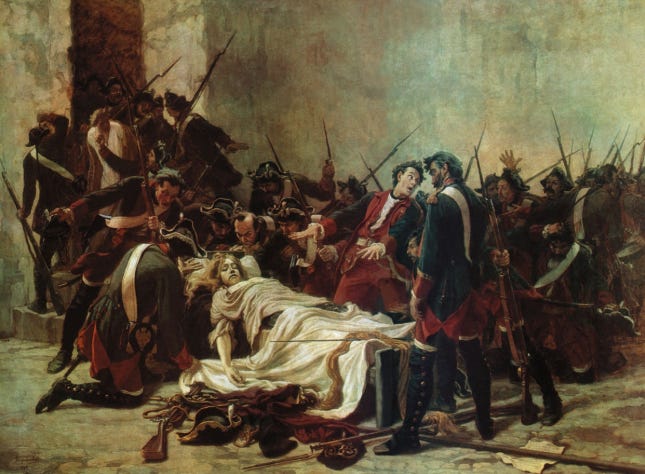
Posthumous portrait of Ivan VI, reflecting the tragic fate of Russia’s child emperor, whose reign was extinguished by political forces beyond his control.
The Art of Ivan VI’s Reign: Representations of Innocence and Tragedy
Despite the brevity of his reign, Ivan VI’s image in art became emblematic of the tragic child emperor.
Artists of the period faced the challenge of presenting an emperor who had no agency in the political events that transpired around him. The few portraits that remain of Ivan VI serve to emphasize his youth and the tragic symbolism of his reign.
Russian art during this period also began to reflect Elizabeth’s autocracy, which contrasted with the idealized depictions of Peter the Great and Catherine the Great.
While there were efforts to record Ivan VI’s image as emperor, it was his later imprisonment that would define the public’s memory of him. The contrast between his youthful innocence and the brutality of his eventual fate makes him one of the most tragic figures in Russian imperial history.
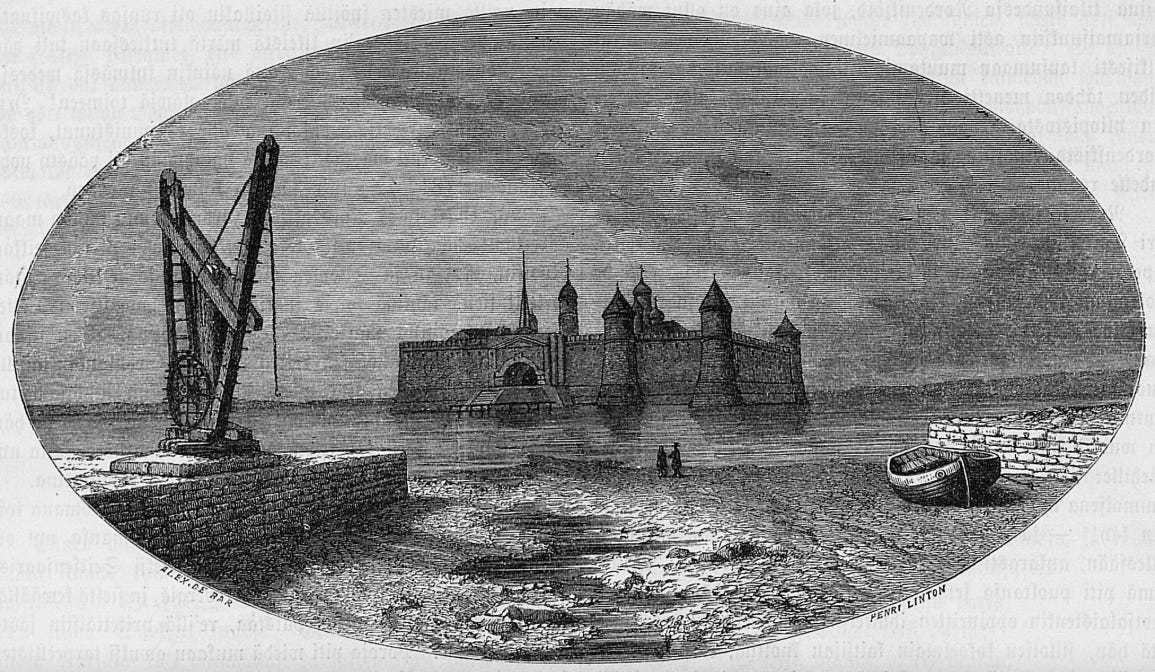
The grim and isolated environment of Ivan VI’s imprisonment.
Ivan VI and the Fragility of Dynastic Power
The reign of Ivan VI, though short-lived and tragic, underscores the fragility of imperial power during the early Romanov period.
His deposition by Elizabeth Petrovna and the subsequent imprisonment and death he suffered highlight the ruthless nature of Russia's court politics, where dynastic power was often undermined by shifting allegiances and military factions.
Ivan’s fate illustrates the volatility that marked the imperial succession and the vulnerability of rulers who were seen as pawns in a larger political game.
However, Ivan VI's tragic story set the stage for the ascension of Empress Elizabeth, whose reign would bring a new era of stability and a revitalization of Russia's imperial power.
Elizabeth's reign, characterized by its autocratic consolidation, military successes, and patronage of the arts, marked a turning point in the Russian Empire's growth.
In our next article, we will delve into Elizabeth Petrovna’s reign.
A period that witnessed the re-establishment of imperial authority and the cultural flourishing of Russia under her leadership.
—Jerry B. Marchant
Join us as we explore how Elizabeth’s ability to navigate the tumultuous political landscape transformed her into one of Russia’s most celebrated monarchs.
I feel for Ivan VI’s being used by others, long before he could possibly know the machinations going on around him, for the throne & the power of rule.
Have a great good day! ☀️🌻
These Russian artist are so unique a d exquisite